
Click here to download the User Manual.
1. Introduction
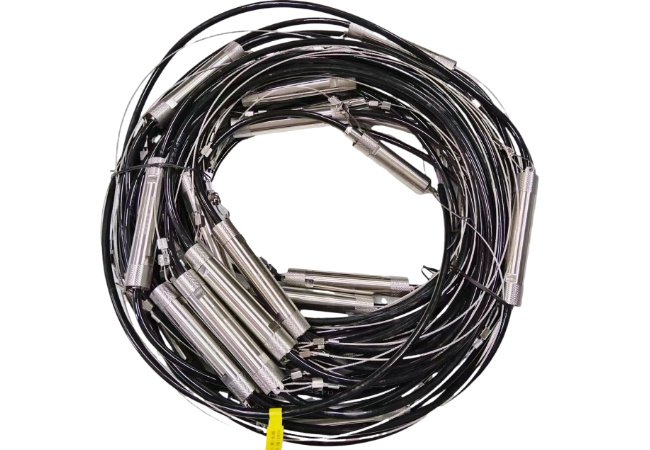
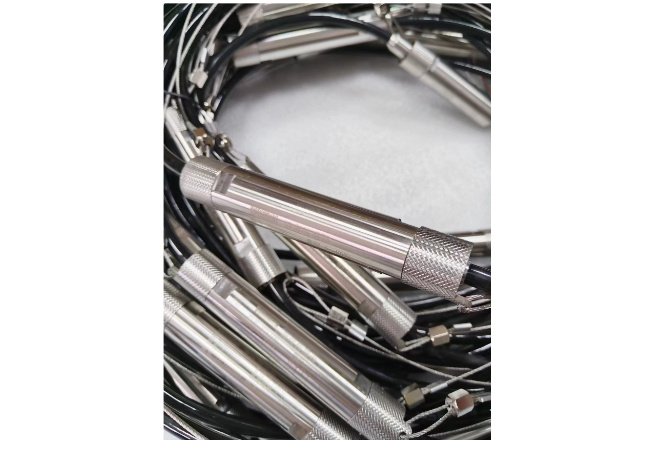
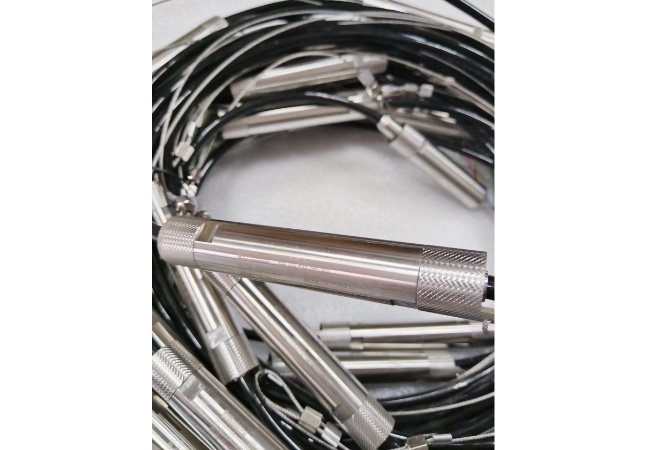
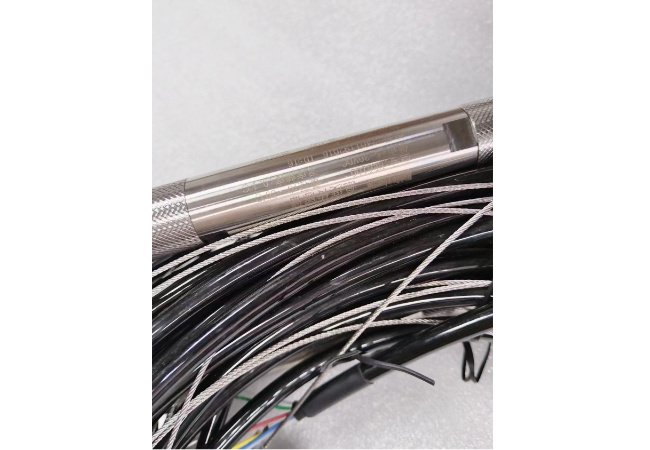
The BTLT-3 Chain Type Temperature Transmitter provides multi-point continuous temperature measurement. This structure adopts integrated vulcanization molding, and double steel wires are used inside the cable for reinforcement. The temperature sensor is fixed inside the reinforced cable, and the temperature-sensing part is reasonably protruded to ensure the accuracy and real-time performance of the measurement.
Each temperature measurement point is designed in a bus parallel connection relationship and distinguished by different IDs. The measurements between them are not interfered with, and each measurement point can be used independently. At the same time, the structure supports trimming for use (with proper sealing of the unused end required).
The unique integrated structure ensures its use in a variety of harsh environments and is applicable to media compatible with stainless steel and vulcanized rubber. This includes monitoring in environments such as drill holes, soil, rivers, groundwater, frozen soil, and inside concrete.
2. Product Features and Advantages
- Customizable temperature measurement spacing and number of temperature measurement points
- RS485 standard MODBUS-RTU protocol
- Low power consumption – suitable for field measurements
- Each temperature measurement point stores its own serial number, ID information, and location information (longitudinal depth, lateral coordinate information).
- Built-in double steel wire reinforced cable, can adapt to harsh environments such as frozen soil deformation.
- High-precision imported temperature measurement components, high accuracy, high stability
- Wide voltage supply range of 9-30V
- Power reverse connection protection
- Integrated vulcanized structure, IP68 protection
- The temperature-sensing part of the measurement point is reasonably protruded to ensure direct contact with the measured medium, ensuring high measurement real-time performance
3. Technical Specifications
| Main Performance Indicators Specifications | |
| Accuracy | ±0.1℃(typical) |
| Resolution | 0.01℃ |
| Range | -55~85℃ |
| Operating Temperature | -55~125℃ |
| Storage Temperature | -55~125℃ |
| Maximum Number of Temperature Measurement Points | 247 |
| Electrical Characteristics | |
| Power Supply Voltage | 9-30VDC |
| Power Protection | Reverse connection protection |
| Output Mode | RS485 standard MODBUS-RTU protocol |
| Insulation | 100MΩ@50V |
4. Wiring Definitions
|
No. |
Wire Color | Definition |
|
1 |
Red | 24V+ |
|
2 |
Blue |
RS485+ |
| 3 | Green |
RS485- |
| 4 | Yellow |
GND |
5. Application Scenarios
5.1 Geotechnical & Geological Survey
1)Borehole & Underground Temperature Profiling
Temperature transmitter chain can be used for deep geothermal exploration, mapping temperature fields in underground mines, and monitoring ground temperatures within fault zones.
2)Permafrost & Frozen Soil Deformation Monitoring
Temperature sensor chains are designed for monitoring freeze-thaw cycles in permafrost beneath railway and highway embankments in high-altitude, frigid regions; their built-in dual-steel-wire tensile structure effectively withstands the pressures exerted by freezing soil and surface creep.
5.2 Hydrology & Environmental Monitoring
1) Groundwater & Soil Stratification Temperature
Temperature sensor chains are suitable for long-term monitoring in applications such as agricultural meteorological stations, studies on groundwater movement patterns, wetland ecology, and the heat conduction processes occurring at various soil depths.
2) River, Reservoir & Lake Thermal Profiling
Temperature chains are used to monitor thermal stratification in reservoirs, assisting water resource authorities in assessing the aquatic environment and the temperature of water released for ecological purposes.
5.3 Civil Infrastructure & Construction Safety
1)Concrete Mass Curing Temperature (Monitoring of hydration heat within mass concrete)
Temperature sensor chains can be used to monitor temperature gradients resulting from the heat of hydration during the pouring of mass concrete for dams, bridge piers, and high-rise buildings, helping to prevent structural cracks caused by temperature differentials between the interior and exterior.
2)Tunnel & Foundation Trench Safety (Monitoring for Tunnel and Foundation Pit Construction Using the Ground Freezing Method)
Temperature sensor strings can be used for real-time monitoring of the temperature field within the frozen wall during construction processes that employ artificial ground freezing to create ice-based retaining walls.